Showing posts with label community garden. Show all posts

Monday, December 5, 2011

Factoria Community Gathering Space

I can't believe it's been 10 months since I last posted.  The idea was to have a place to write and share thoughts about the grocery store closure--since then the momentum really picked up and life became more about doing rather than writing.  Now that the garden is (pretty much) put to bed and Sustainable Bellevue is out to pasture for a while it's time to assess and develop the direction for next year.

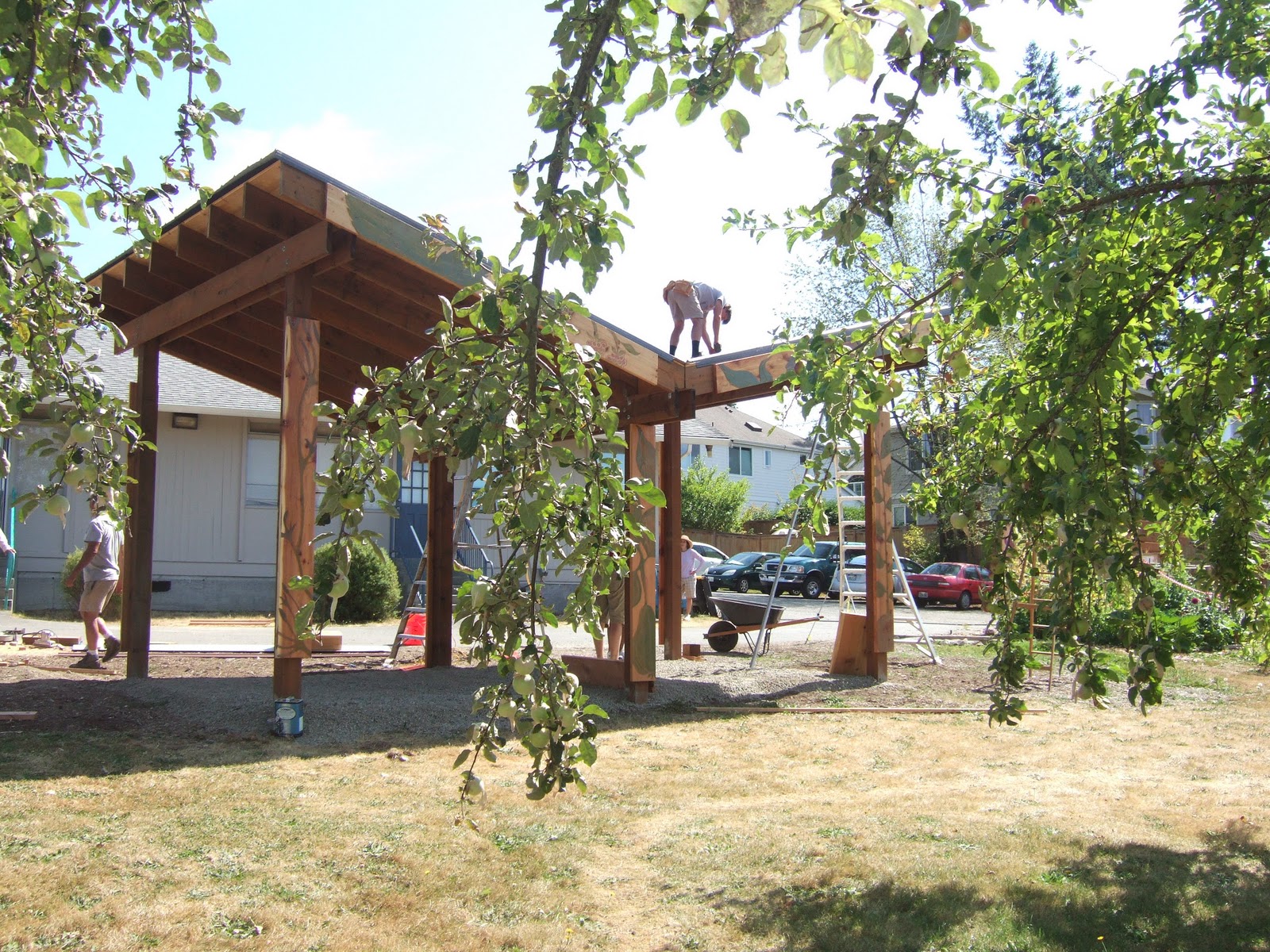
The big news this year was the creation of a public gathering space in Factoria.  A Lutheran Church there has been taking care of a historic orchard and recently added a p-patch to a growing list of ways to engage their immediate neighborhood.  This caught the attention of Pomegranate, and we became one of their special projects this year, which meant that they would offer to facilitate the design and building of a community gathering space.  Be sure to check out the video on the Pomegranate Center linked above.

We decided on an outdoor amphitheatre, a path through the orchard linking the public entries and p-patch to the amphitheatre, a formal gateway and a garden shelter.  All to be built in one three-day weekend at the end of July!  At the end of construction we had a wonderful party with roast pig and entertainment by Pat Wright and the Total Experience Gospel Choir.


Nick and Ingrid during the building of the garden shelter (in the background).
First you dig a hole.


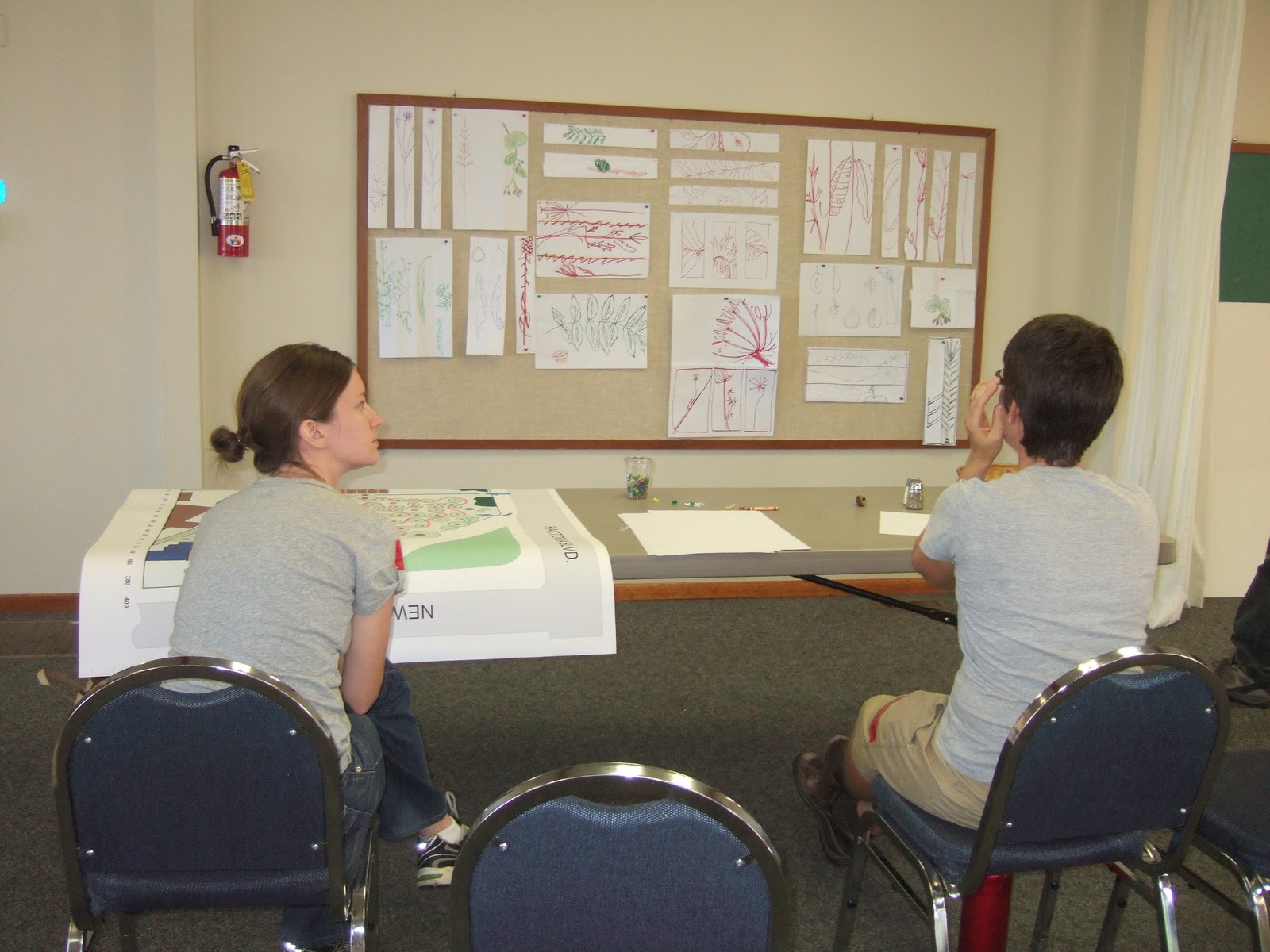
While they were building the garden shelter we worked on drawing things from the orchard that interested us to be carved later into the supports of the garden shelter.
The processional looking back to the church from the amphitheatre.  Pathway candles were poured into concrete molds created by Ingrid and her kids' crew.
Update:  Now Milenko is interested in taking on Newport Hills!

Friday, October 29, 2010

Factoria P-Patch's first summer


Our p-patch at Holy Cross Lutheran Church yielded so much produce this summer that we were able to donate 1,000 pounds to the Hopelink Foodbank.

Thursday, September 17, 2009

You Say Snohomish/I Say Snoqualmie!

Saturday we spent the sunny, hot afternoon at South 47 farm learning firsthand what it was like to bring in the harvest, or, in our case, what it was like to pick a few beans for dinner, admire a gorgeous, cat-sized squash the color of celadon, pluck a huge bag of red onions from a hook in a greenhouse, and cut healthy sideshoots of basil from a very long row. Aromatic bliss! All this and some darling alpacas (not for picking!) too. Of course, early valley farmers didn't get to follow up a hard day's harvest with a late lunch in air-conditioned comfort at Racha Thai restaurant in Woodinville either. God we're spoiled!

Everything but the squash was eaten later in a quickie pasta beefed up with ripe heirloom tomatoes from our own garden.


Sunday we were back on the eastside hunting down farms in Carnation/Duvall by way of Snohomish (don't ask! but it was a lovely drive!) Again, bringing in the harvest at Fall City Farms this time--lacinato kale, Chioggia beets, lots of Bright Lights chard and broccoli. Perhaps early farmers of Snoqualmie Valley would have felt more at home dining in the friendly, goofy homestyle comfort surrounded by the kitsch collection at Armadillo BBQ in Duvall than in a suburban stripmall (like we did the day before). Next door at the antique store we picked up a bass and amp to add to the family's burgeoning collection of musical instruments.

I looked to Julia Child for inspiration in serving up the fresh-picked broccoli to the family. I made her hollandaise which was insanely easy and let's just say the kids ate all their veggies.

The chard and rest of the basil was eaten last night in a quinoa saute with onion and leftover hollandaise. Some ricotta and lot of parmesan. It was a little weird. It shoulda been pasta. But we'd eaten it all Saturday night!

Today I'm caramelizing all my onions for the freezer. I may roast the squash. The kale will be slowly simmered for a Tuscan stew. The trick is to get everything sorted out (frozen, eaten, etc.) before the next farm foray THIS weekend. Somebody's got to bring home the veggies!

Under the "gourdwalk" at Fall City Farm

Tuesday, August 18, 2009

Sunny Day Newport Hills

My response to Mayor Grant Degginger's challenge to come up with a vision for Newport Hills would look something like this:


1. New grocery store (smaller footprint with two stories of condos above)
2. Fruit and produce stand
3. Neighborhood kiosk for announcements, etc.
4. New site of Mojo Espresso stand
5. Farmer's market
6. Community garden and outdoor movie theater


Out of sight, out of mind?

We all need aerial photographs for dreaming purposes. They let the sun in on a cloudy day--every one of the areas I circled above gets full sun for most of the day, even while leaving plenty of spaces for parking. I always wondered as I parked my car near Pike Place Market or at the top of a parking garage why my car was getting a better view than I was.

Another way to look at these photos is to see the number of spaces we provide for our cars: then imagine exchanging one parking space for a raised garden bed. One little island of 20 spaces could provide a lot of space for a community garden.

I originally came up with this little daydream about six months ago. Since then Newcastle Fruit and Produce, whom I've been wooing to open a branch here in Newport Hills has let me know that the idea doesn't hold much potential. In the words of one of the owners: "Out of sight, out of mind."

Thursday, May 21, 2009

Another space for a community garden

Eastside Catholic High School has moved and is now behind a hurricane fence until Bellevue School District takes it on as temporary campus for a series of middle schools undergoing remodelling. The first of these will be Tyee Middle School, and construction there is scheduled to begin in June 2010.

Lots of southwestern exposure on a deadend street which connects via a popular neighborhood walkway to this site opposite Stod's:


Friday, March 27, 2009

Earth Day Event


A Newport Hills Earth Day event is in the early planning stages for Saturday April 25. The idea is to promote a community garden in the business center during the transition from gigantic parking lot to thriving focal point.

We plan to have people bring containers from home and have soil, seeds, plants and demo models on display for the purpose of raising neighbors' awareness of the importance of sustainability. Recycling, composting, saving water and decreasing pollution and runoff, as well as raising food are all going to play a part.

One possible site includes the highly visible and sun-drenched (when it's not raining) south end of Stod's across the street from a small Metro Park n' Ride.


Tuesday, March 10, 2009

Community Gardens: Step 1


From the friendly folks at American Community Gardening Association:


To start a community garden, FORM A PLANNING COMMITTEE


Determine if there really is a need and desire for a garden.
What kind of garden--vegetable, flower, trees, a combination?
Who will the garden serve--youth, seniors, special populations, people who just want an alternative to trash?
If the project is meant to benefit a particular group or neighborhood, it is essential that the group be involved in all phases.


Organize a meeting of interested people.

Choose a well-organized garden coordinator.Form committees to accomplish tasks: Funding & Resource Development; Youth Activities; Construction; Communication.


Approach a sponsor.
A sponsor is an individual or organization that supports a community garden. Site sponsorship can be a tremendous asset. Contributions of land, tools, seeds, fencing, soil improvements or money are all vital to a successful community garden. Some community gardens can provide most of their provisions through fees charged to the membership; but for many, a garden sponsor is essential. Churches, schools, citizens groups, private businesses, local parks and recreation departments are all potential supporters. Community Development Block Grants are sometimes available through your municipality.
Make a list of what needs to be done.
Find a garden site.


Obtain lease or agreement from owner.
Decide on a mailing address and central telephone number(s). Try to have at least 3 people who are very familiar with all pertinent information. Form a telephone tree.
If your community garden has a budget, keep administration in the hands of several people.
Choose a name for the garden.

Saturday, February 28, 2009

Putting Parking in its Place II


When was the last time you went somewhere because it had a great parking lot? Unless I'm seriously mistaken, nobody goes to a place just because you can park there. In fact, according to Ethan Kent, the current obsession with parking is one of the biggest obstacles to achieving livable cities and towns, because it usually runs counter to what should be our paramount concern: creating places where people enjoy spending time.

He's found that the hang-up on parking is an indicator that a community has no broader vision for itself.
Come on, Newport Hills! We're better than that! Red Apple, where is thy core??

The problem with the Red Apple is there is no longer a purpose for the parking lot. I know a few skateboarders who would argue this point, but with the loss of a destination like the supermarket, and soon, the drugstore and with it possibly the one remaining gas station, there is a huge hole in the center of our community.

In temporarily abandoned park(ing) spaces, reclaiming them for public use for even one season is a viable alternative, if the owners are willing to work with the residents and city regulations, which typically require a simple temporary use permit and permission from the owner.

How about starting with a few ideas for a sustainable vision for parking lots. Why sustainable? Because right now it's on everyone's radar for a good reason--keeping people in their own communities keeps them out of their cars, and there are grant opportunities out there for neighborhoods to do what they can to help the planet.

Farmers Markets


Who doesn't love a Farmers Market on the weekends?

“Businesses are increasingly cooperative,” according to a recent PI article about the explosion of Farmers Markets in Seattle. "Owners of the Grocery Outlet in Madrona rescued the displaced MadCap (Madison Park/Capitol Hill) Farmers Market by welcoming it to the store parking lot… Year-round market sales were up 300% this year (2008) and the year before. (As well as way up in attendance, even in the wind, rain and snow…)"

A Kiosk


Center a kiosk for community information which could grow into a drop place for CSA Community-Sustained Agriculture produce boxes.

Raised Beds and Victory Gardens

For most residents of Newport Hills, the garden is a low-maintenance landscape, sort of Japanese/Zen and shady. They're beautiful, restful places, but often lacking in adequate sun and warmth for those gorgeous tomatoes, peppers, cucumbers and melons we crave. During times of economic hardship, victory gardens are grown in the community's sunniest spots to help offset the high price of fresh produce.

Here's my suggestion. We've already identified a lot of the sunniest spots in the Red Apple core (pun intended!) Take a look at the aerial shots in my previous post "Google Earth". There they are: in the parking lot. For every other parking spot, create a raised bed as the "seed" of a community garden. It's a wonderful way to have residents of all ages share their knowledge and interests. There could be seed give-aways and plant exchanges to raise money for community events.

The water supply is already there, and when it comes time to build something more permanent, the raised beds can be relocated elsewhere. Have the master gardeners set up a display showing water-wise techniques and other ideas for community sustainability.

Xeriscaping

On a similar note, landscaping is a critical component to the livability of any home--just remember--vegetation good;native vegetation better! An example of site sensitive vegetation is xeriscaping, a term coined by the Colorado Water Wise Council and featured in the website Sustainable Design Update here


They recommend these three simple rules for sustainability, whether it's in your own garden, or your community's:

First, make an effort to preserve any existing native plants, as they obviously like where they're living and can be groomed into a low maintenance greenscape.

Second, work with a local gardening supply store (not a Big Box) to help you select plants that will grow best given your local climate and soil conditions, reducing the need for excessive watering.

Third, seek out organic options for fertilizer (manure) and herbicide (vinegar or corn meal) to prevent any long term negative impact in your garden or nearby streams.

Lesson 8: Let sustainability be our watchword

Sunday, February 15, 2009

Valentines Day in Seattle

Dancing huckleberries (harvested by hand) in a Kir Champagne Magnifique


Madison Park


"Mad(ison) P(ark)" pea patch climbs up a hill.


A Mom and Pop market in the heart of the Madison Valley neighborhood.


Restaurant door fronts all had a painted heart created by local children.
After an exquisite brunch at Cafe Flora we walked Stellarondo in the Arboretum where she cavorted up steps through the hybrid rhodies and even took a dip in the waterlily pond.


At the Seattle Asian Art Museum in Volunteer Park. Beautiful Mughal paintings in four or five rooms. Borrow a magnifying glass. Afterwards had an iced tea in the light-filled central space and noticed that every one of those gorgeous art deco windows in these front doorways OPEN! I counted over 40 handles. None of them were open but just the thought of what that would do for the space made me giddy. Look closely and you'll see some of them. Well worth the trip over, and the Conservatory next door is full of gorgeous orchids.